What’s at Stake
Most schools are committed to inclusion.
But when support for students with disabilities varies from one classroom to the next, schools are not just dealing with an instructional issue—they are dealing with a systems issue.
When inclusion systems are not strong enough:
- accommodations are implemented inconsistently
- collaboration becomes reactive rather than proactive
- support depends too heavily on the teacher
- access to grade-level learning becomes uneven
- students with disabilities struggle to make measurable progress
- leaders are left managing compliance risks, achievement gaps, and uneven instruction
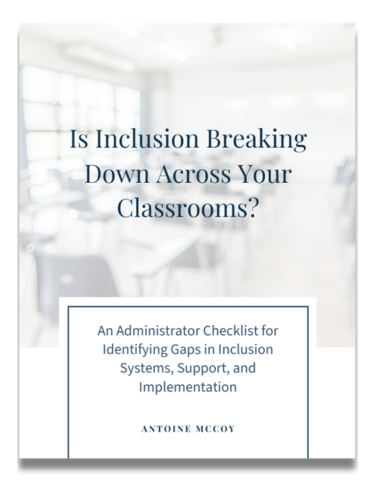
This checklist helps school leaders identify where inclusion systems may be breaking down so they can better understand where stronger support and implementation are needed.

What You'll Get
✓ A quick way to spot gaps in inclusion systems
✓ A practical tool for identifying implementation gaps
✓ Reflection questions to help determine next steps
✓ A stronger starting point for leadership conversations about support, implementation, and measurable progress
Get the Checklist
Use this quick checklist to identify where support for students with disabilities may be inconsistent across classrooms and where stronger systems may be needed.
We respect your privacy. Unsubscribe anytime.
About Antoine McCoy
I help campus and district leaders fix the breakdown in inclusion systems so students with disabilities make measurable progress in general education classrooms.

Stronger Inclusion Starts With Stronger Systems
If students with disabilities are not receiving consistent support across classrooms, this checklist will help you identify where the gaps may be—and where to focus next.